Friday, January 18, 2019
Critiquing The Class
I thought this semester class was really fun (though I did not talk much). Mr. Schick is one of my favorite teachers this (along with Mr. Huber) and I love is comedy that jokes about the class. I think one of the best parts of the semester class was when he let Patrick teach us back in October or some time around there. I also liked the Power Points because I feel like that's how I learn better. I think the worst part of this class was the tests, because I didn't do amazing on all of them. Most of them were okay, but like this test....I don't wanna talk about it. I feel like this test was definitely the hardest just because the religions are all similar. The classes we had were fun for the most part, and Mr. Schick is a good teacher, but I felt like the class was a bit harder than I had anticipated.

Wednesday, January 16, 2019
Last Blog Before The Final Test Of Semester 1
Today was basically a day we got the class free. We got our exam essays back first, got an eighty-nine. . . feel like that should have been a 90 looking at everything I did wrong (mostly grammatical errors and and citing sources). I feel like overall though I did pretty good on the exam. I mean I even surprised myself on the other ones; I got a ninety-two on biology (Never thought that would happen a day in my life), a ninety-two on Algebra (never thought I'd get an A again on an exam for this subject), and some eighties on the rest along with a ninety-one on Intro to Bible exam. So I really think I did good on these exams in general, which Im happy about since I need an overall grade for the year to be an eighty-five or above percent in all my classes in order to stay in the literary arts program. I really need to do good on the upcoming test for this class too so my grade doesn't drop to a disgusting B that I never want to have on my report card this year. But I'm glad I'm doing well this year and that I'm still in the literary arts program (which I need to stay in) since I want my career to be an author that writes both books/novels and scripts for movies (always have been my dream).
Monday, January 14, 2019
Five Religion Paragraphs
Christianity is the top religion around to date. It has nearly 2.2 billion adherents and was founded by Jesus Christ, who is believed to be the Messiah in this with. Christians are geographically located in Europe, the Americas, and Southern Africa. Their holy book is called the Bible consists of 73 books each consisting of stories that prove the faith and that God is real or prove how Jesus is the Messiah and truly divine. In this belief, the Pope is the head of the Church and have priests as local authorities. Many of their beliefs include that Jesus is both human and divine and taught people how to live a virtuous life.
Islam is another religion that is one of the most popular. It consists of 1.5 billion adherents that are called Muslims. These people are located in Indonesia, the Middle East, and North Africa mainly. The founder of this faith is Muhammad who lived from 570-632. Their holy book is the Qur'an and speaks their beliefs. Some of these beliefs include monotheism, Five Pillars, and that they see their purpose in life as serving and submitting to Allah (God). The Five Pillars are testimony, prayer, alms-giving, fasting, and pilgrimage. Mecca is the Muslims holiest city.
Hinduism is an interesting religion. It has 1.1 billion adherents which are called Hindus. These people mainly live in India and Nepal and follow the holy book which they call; The Vedas. The Vedas consists of the eternal truths revealed to ancient sages, and is composed in verse form which means the book is meant to be sung and easily memorized. This religion has no distinct founder and the Hindus believe in reincarnation in a different way than Christians and Muslims.
Buddhism is one religion that allows you to believe in another faith, while still practicing Buddhism. It ranges from 500 million adherents to 1.5 billion adherents since it allows people to have other faiths along with Buddhism. Buddhists are mainly located in Southeast Asia, China, Nepal, Japan, and interestingly enough, the United States has 1.2 million Buddhists in the country. The founder of this faith is Siddhartha Gautama. The faith consists of Four Noble Truths and The Eightfold Path in which they guide people to living a just and joyous life like Siddhartha.
Judaism is among the smallest religions out there, coming in with only 14-18 million adherents. The Jews are located in Israel (6.4 million) and United States (5.3-7 million). The founder of this religion is the biblical figure Abraham. Their holy book is the Torah which includes the first five books of the Old Testament in the Bible; Genesis, Exodus, Leviticus, Numbers, and Deuteronomy. Jews believe in ethical monotheism in which God is the one and is concerned with actions of mankind. Like Christians they believe in the Ten Commandments and also believe in 13 Principles of Faith.
Islam is another religion that is one of the most popular. It consists of 1.5 billion adherents that are called Muslims. These people are located in Indonesia, the Middle East, and North Africa mainly. The founder of this faith is Muhammad who lived from 570-632. Their holy book is the Qur'an and speaks their beliefs. Some of these beliefs include monotheism, Five Pillars, and that they see their purpose in life as serving and submitting to Allah (God). The Five Pillars are testimony, prayer, alms-giving, fasting, and pilgrimage. Mecca is the Muslims holiest city.
Hinduism is an interesting religion. It has 1.1 billion adherents which are called Hindus. These people mainly live in India and Nepal and follow the holy book which they call; The Vedas. The Vedas consists of the eternal truths revealed to ancient sages, and is composed in verse form which means the book is meant to be sung and easily memorized. This religion has no distinct founder and the Hindus believe in reincarnation in a different way than Christians and Muslims.
Buddhism is one religion that allows you to believe in another faith, while still practicing Buddhism. It ranges from 500 million adherents to 1.5 billion adherents since it allows people to have other faiths along with Buddhism. Buddhists are mainly located in Southeast Asia, China, Nepal, Japan, and interestingly enough, the United States has 1.2 million Buddhists in the country. The founder of this faith is Siddhartha Gautama. The faith consists of Four Noble Truths and The Eightfold Path in which they guide people to living a just and joyous life like Siddhartha.
Judaism is among the smallest religions out there, coming in with only 14-18 million adherents. The Jews are located in Israel (6.4 million) and United States (5.3-7 million). The founder of this religion is the biblical figure Abraham. Their holy book is the Torah which includes the first five books of the Old Testament in the Bible; Genesis, Exodus, Leviticus, Numbers, and Deuteronomy. Jews believe in ethical monotheism in which God is the one and is concerned with actions of mankind. Like Christians they believe in the Ten Commandments and also believe in 13 Principles of Faith.
Thursday, January 10, 2019
Notes on religions packet
- Although most migrants learn the language of the new location, they typically retain their religion. - - Reliable statistics on the number of adherents are difficult to obtain.
- The four largest religions: Christianity, Islam, Hinduism, and Buddhism.
- Two point two billion people are Christians.
- One point six billion people are Muslim.
- One billion people are Hindu.
- Five million people are Buddhists
- Other religions include Juchte, Judaism, Sikhism, and Spiritism.
- Fourteen to eighteen million adherents to each religion listed on the point above.
- Sixteen percent of the world's population are unaffiliated with a religion (atheist, agnostic, et cetera)
- Atheism is a belief that God does not exist.
- Agnosticism is a belief that the existence of God cannot be proven empirically.
- All but a handful of countries, their main religions are either Christianity or Islam.
- Christianity is the most widely practiced religion in every country of the Western Hemisphere and in most European countries and Sub-Saharan Africa.
- Islam is the most widely practiced religion in nearly every country of Southwest Asia and North Africa as well as Central Asia.
- The four largest religions: Christianity, Islam, Hinduism, and Buddhism.
- Two point two billion people are Christians.
- One point six billion people are Muslim.
- One billion people are Hindu.
- Five million people are Buddhists
- Other religions include Juchte, Judaism, Sikhism, and Spiritism.
- Fourteen to eighteen million adherents to each religion listed on the point above.
- Sixteen percent of the world's population are unaffiliated with a religion (atheist, agnostic, et cetera)
- Atheism is a belief that God does not exist.
- Agnosticism is a belief that the existence of God cannot be proven empirically.
- All but a handful of countries, their main religions are either Christianity or Islam.
- Christianity is the most widely practiced religion in every country of the Western Hemisphere and in most European countries and Sub-Saharan Africa.
- Islam is the most widely practiced religion in nearly every country of Southwest Asia and North Africa as well as Central Asia.
Wednesday, January 9, 2019
Average Class
Today we basically went over the three questions we had for our blog yesterday. We also got to hear another one of Mr. Schick's stories about cuddle night (back when we saw an email that said it's cuddle night! most of the class had taken it the wrong way and thought it was Mr. Schick and his wife doing the cuddling, not Mr. Schick helping out with the babies at the hospital). He said that there was a baby who was born at like 5 pounds and now ways 4 pounds and it made me think how unhealthy that is anti reminded me of something my aunt showed me. So over Christmas break my aunt showed me all these pictures of her friend's little baby boy who they dressed up like an elf and made him their real life elf-on-the-shelf and captured all the funny things he did and posted them on Facebook. The reason it cam to mind was because he was a really tiny baby and is going to turn one soon and needs heart surgery soon since he's so tiny, so I just thought of him.
Tuesday, January 8, 2019
Three Questions
1) There are four basic Vedic texts in use by the Hindus; Rig-Veda, Sama-Veda, Yajur-Veda, and Atharva-Veda.
Rig-Veda: "Knowledge of the Hymns of Praise", for recitation; written in Sanskrit; the oldest text among the four texts; second largest text and the most important one too; consists of 1028 hymns and is divided into ten books called mandalas.
Sama-Veda: "Knowledge of the Melodies", for chanting; written in Sanskrit; it is referred to being the Rig-Veda set to music; largest text since it lists all of the chants; consists of 1549 verses.
Yajur-Veda: "Knowledge of the Sacrificial Formulas", for liturgy; used mainly for worship rituals; written in Sanskrit; split into two groups-the "black" or "dark" and the "white" and "bright"; consists of 1875 verses.
Atharva-Veda: "Knowledge of the Magic Formulas"; written in Sanskrit; a collection made up of 730 hymns with about 6000 mantras that are divided into twenty books; includes formulas for magic and daily rituals for initiation to learning.
2) The practice of indulgences is the Catholic Church receiving payments that purchased people out of punishment. I think Martin Luther objected this because it is wrong to take money from people that sinned so they can be forgiven whereas God forgives anyone for no cost of money just to try and do better. My research led me into seeing the 95 things Martin Luther objected about the Church.
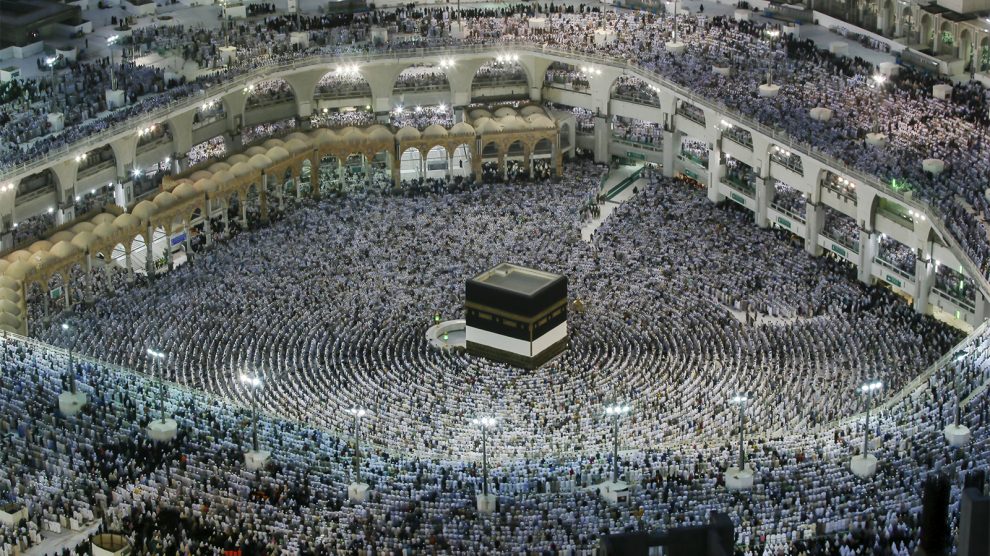
3) The Hajj takes five days and all Muslims that are financially able and physically able to perform must do it once in their lives. It is performed in the 12th month (the one that is required) of their lunar calendar and moves backward every year. Over the five days the Muslims perform a series a rituals and on the last day they celebrate the Festival of Sacrifice.
Rig-Veda: "Knowledge of the Hymns of Praise", for recitation; written in Sanskrit; the oldest text among the four texts; second largest text and the most important one too; consists of 1028 hymns and is divided into ten books called mandalas.
Sama-Veda: "Knowledge of the Melodies", for chanting; written in Sanskrit; it is referred to being the Rig-Veda set to music; largest text since it lists all of the chants; consists of 1549 verses.
Yajur-Veda: "Knowledge of the Sacrificial Formulas", for liturgy; used mainly for worship rituals; written in Sanskrit; split into two groups-the "black" or "dark" and the "white" and "bright"; consists of 1875 verses.
Atharva-Veda: "Knowledge of the Magic Formulas"; written in Sanskrit; a collection made up of 730 hymns with about 6000 mantras that are divided into twenty books; includes formulas for magic and daily rituals for initiation to learning.
2) The practice of indulgences is the Catholic Church receiving payments that purchased people out of punishment. I think Martin Luther objected this because it is wrong to take money from people that sinned so they can be forgiven whereas God forgives anyone for no cost of money just to try and do better. My research led me into seeing the 95 things Martin Luther objected about the Church.
3) The Hajj takes five days and all Muslims that are financially able and physically able to perform must do it once in their lives. It is performed in the 12th month (the one that is required) of their lunar calendar and moves backward every year. Over the five days the Muslims perform a series a rituals and on the last day they celebrate the Festival of Sacrifice.
Friday, January 4, 2019
Adherents to the top five religions comparison
The five religions ranked against each other as of our notebook/Mr. Schick's Power Point:
1) Christianity - two point two billion adherents - 29.71% worldwide
2) Islam - one point five billion adherents - 20.3% worldwide
3) Buddhism - one point five billion adherents (chose the highest number) - 20.3% worldwide
4) Hinduism - one point one billion adherents - 14.9% worldwide
5) Judaism - eighteen million adherents - 0.2% worldwide
The five religions ranked against each other according to the CIA World Fact Book:
1) Christianity - two point two billion adherents - 31.4% worldwide
2) Islam - one point five billon adherents - 23.2% worldwide
3) Hinduism - one point one billion adherents - 15% worldwide
4) Buddhism - five-hundred million to one point five billion adherents - 7.1% worldwide
5) Judaism - eighteen million adherents - 0.2% worldwide
The five religions ranked against each other according to adherents.com:
1) Christianity - two point two billion adherents - 33% worldwide
2) Islam - one point five billion adherents - 21% worldwide
3) Hinduism - one point one billion adherents - 14%
4) Buddhism - five-hundred million to one point five billion adherents - 6% worldwide
5) Judaism - eighteen million adherents - 0.22% worldwide
1) Christianity - two point two billion adherents - 29.71% worldwide
2) Islam - one point five billion adherents - 20.3% worldwide
3) Buddhism - one point five billion adherents (chose the highest number) - 20.3% worldwide
4) Hinduism - one point one billion adherents - 14.9% worldwide
5) Judaism - eighteen million adherents - 0.2% worldwide
The five religions ranked against each other according to the CIA World Fact Book:
1) Christianity - two point two billion adherents - 31.4% worldwide
2) Islam - one point five billon adherents - 23.2% worldwide
3) Hinduism - one point one billion adherents - 15% worldwide
4) Buddhism - five-hundred million to one point five billion adherents - 7.1% worldwide
5) Judaism - eighteen million adherents - 0.2% worldwide
The five religions ranked against each other according to adherents.com:
1) Christianity - two point two billion adherents - 33% worldwide
2) Islam - one point five billion adherents - 21% worldwide
3) Hinduism - one point one billion adherents - 14%
4) Buddhism - five-hundred million to one point five billion adherents - 6% worldwide
5) Judaism - eighteen million adherents - 0.22% worldwide
Subscribe to:
Comments (Atom)